Gastric Bypass

Get a Free Quote

Ücretsiz Bilgi Formu Tedaviler

Contact us

You can contact us for all the questions and information you have about Obesity Surgery. All our information and preliminary meetings are free.

Gastric Bypass Surgery

Gastric bypass is a bariatric surgical procedure used to treat obesity. This surgery aims to promote weight loss by reducing the volume of the stomach and reorganizing the intestines.

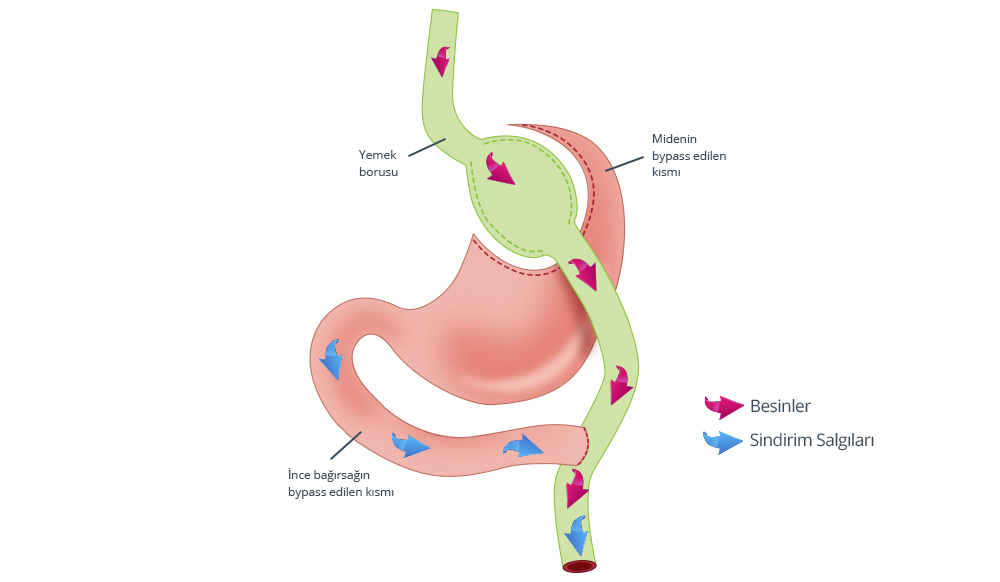
In gastric bypass surgery, the stomach is cut in half and a smaller upper stomach pouch (stomach bag) is created. This upper stomach pouch is connected directly to the small intestine. Thus, part of the food enters the upper stomach pouch and the rest of the intestine is bypassed.

During surgery, the junction of the stomach and intestines is also changed. This change causes food to travel less distance through the small intestine and reduces absorption. Thus, both the volume of the stomach is reduced and the absorption of food from the intestine is partially blocked.

Gastric bypass surgery is used to control obesity-related health problems and achieve weight loss. In the postoperative period, the patient consumes smaller amounts of food and feels full more quickly. In addition, the absorption of food is reduced by the reorganization of the intestines.

Gastric bypass surgery is usually performed using laparoscopic surgery. This allows smaller incisions to be used and makes for a less invasive procedure. In the postoperative period, the patient should change their diet and have regular follow-up visits.

The risks and advantages of the surgery vary depending on the individual’s condition and medical history. Therefore, it is important to consult with a bariatric surgery specialist to determine the suitability of gastric bypass surgery.

Should I take vitamins after gastric bypass surgery?

Yes, it is generally recommended to use vitamin and mineral supplements after gastric bypass surgery. Gastric bypass surgery can affect the absorption of food from the intestines, causing nutrient deficiencies. In addition, because the amount of food taken in is also reduced due to the reduced stomach volume, it can be difficult to get enough of the vitamins and minerals the body needs.

The most commonly recommended vitamin and mineral supplements after gastric bypass surgery are the following:

Multivitamin: It is usually recommended to take a multivitamin supplement in the postoperative period. This is a supplement that usually contains B vitamins, vitamin C, vitamin D, vitamin E and minerals. A multivitamin is usually a supplement that should be taken for life after surgery.
Iron: Iron deficiency can be common after gastric bypass surgery. Therefore, you may need to take iron supplements.
Calcium and vitamin D: Calcium absorption may decrease after surgery. Therefore, you may be advised to take calcium and vitamin D supplements. Calcium is important for bone health.
Vitamin B12: Vitamin B12 deficiency may develop after gastric bypass surgery. It is important to take vitamin B12 supplements.

The dosage and frequency of these supplements may vary according to your individual needs and your doctor’s recommendations. As each person’s needs are different, it is important to discuss your supplements and dietary plan with your doctor. It is also important to have regular follow-up check-ups and blood tests to monitor your vitamin and mineral levels.

Gastric Bypass

It is the removal of a large part of the stomach and reshaping it into a small tube.

Mini Gastric Bypass

Along with the stomach, the intestines are also treated.

Diabetes Surgery

With this surgery, you can get rid of the use of insulin.

Gastric Balloon

Without surgery, a balloon is inserted into your stomach through endoscopy.

Revision Surgery

After weight loss surgery, weight regain is performed on patients.

Sleeve Gastrectomy

It is the reduction of the stomach into a tube shape.