Mini Gastric Bypass

Get a Free Quote

Ücretsiz Bilgi Formu Tedaviler

Contact us

You can contact us for all the questions and information you have about Obesity Surgery. All our information and preliminary meetings are free.

Mini Gastric Bypass

Mini gastric bypass (MGB) is a bariatric surgical procedure used to treat obesity. This surgery is performed to promote weight loss by reducing the volume of the stomach and reorganizing the intestines.

In MGB surgery, the stomach is cut to create a small stomach tube. This tube is then connected to the beginning of the intestines. In this way, food enters the stomach tube and is then directed into the intestines. During surgery, the point where the stomach and intestines meet is also changed.

MGB surgery promotes weight loss by acting on two main mechanisms. Firstly, by reducing the volume of the stomach, less food is consumed and the person feels full more quickly. Secondly, by reorganizing the intestines, the absorption of food is partially reduced.

MGB surgery is a shorter and less invasive procedure compared to other bariatric surgical procedures. It is performed using laparoscopic surgery, which means smaller incisions, fewer complications and a faster recovery process.

MGB surgery has some potential risks and complications, so it is important to have a detailed pre-operative assessment and consultation with your doctor. In the postoperative period, you may need to change your diet and have regular follow-up check-ups.

As each individual’s situation is different, it is important to consult with a bariatric surgery specialist to determine the suitability of MGB surgery and to assess the potential risks.

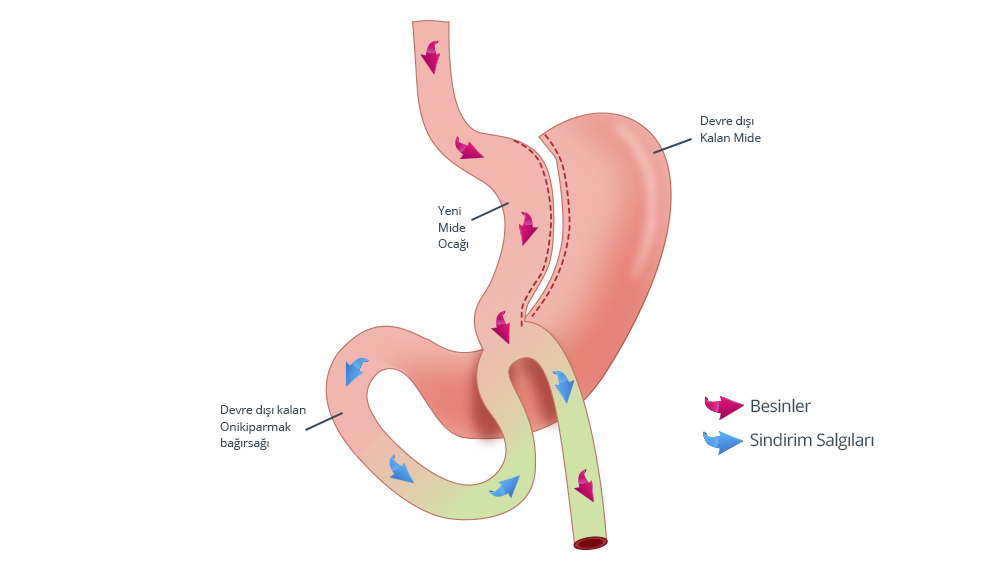
What is the difference between Mini Gastric Bypass and Gastric Bypass?

Mini gastric bypass (MGB) and gastric bypass are two different bariatric surgical procedures used to treat obesity. Here are the main differences between MGB and gastric bypass:

  1. Stomach shape and bowel redirection: In gastric bypass surgery, the stomach is cut in half to create a smaller upper stomach pouch (stomach bag), which is connected directly to the small intestine. Thus, some of the food enters the upper stomach pouch and the rest of the intestines are bypassed. In MGB surgery, the stomach is cut into a longer stomach tube, which is connected to the beginning of the intestines.
  2. Procedure time and invasiveness: Gastric bypass surgery is a longer and more invasive procedure. It may require more incisions in the abdomen and involves more anatomical changes. MGB surgery is a shorter and less invasive procedure. It is performed using laparoscopic surgery and requires smaller incisions.
  3. Mechanism of action: Both surgeries promote weight loss by reducing stomach volume and reorganizing the intestines. However, gastric bypass surgery affects the absorption of food from the intestines more, while MGB surgery affects absorption less.
  4. Weight loss: Both gastric bypass and MGB surgeries promote weight loss. However, the process of weight loss can vary depending on individual factors and the long-term effectiveness of both surgeries is similar.

Which surgery is preferred depends on factors such as an individual’s obesity status, medical history and personal preferences. A bariatric surgery specialist will assess the person’s condition and provide guidance to determine the most appropriate procedure.

Gastric Bypass

It is the removal of a large part of the stomach and reshaping it into a small tube.

Mini Gastric Bypass

Along with the stomach, the intestines are also treated.

Diabetes Surgery

With this surgery, you can get rid of the use of insulin.

Gastric Balloon

Without surgery, a balloon is inserted into your stomach through endoscopy.

Revision Surgery

After weight loss surgery, weight regain is performed on patients.

Sleeve Gastrectomy

It is the reduction of the stomach into a tube shape.